
If you’ve paid attention to water sports recently or scrolled through social media and seen those “water go-karts” speeding across lakes, you must have noticed a detail: these boats are extremely fast, turn nimbly, and there’s no swaying propeller at the stern.
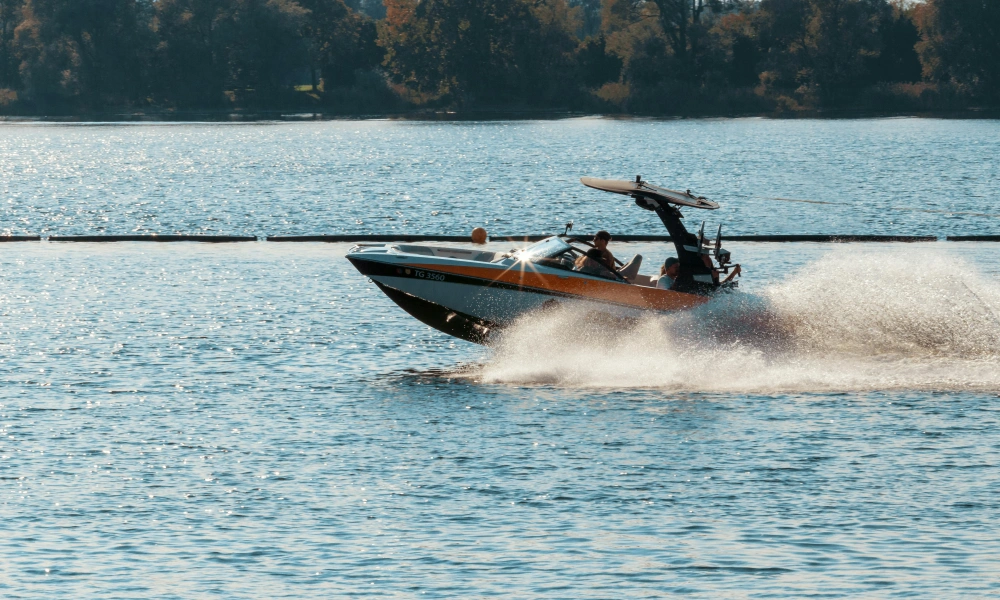
Many people wonder how these boats run without the traditional “big fan.” In fact, the secret lies in a sophisticated device at the bottom of the boat—an Electric Water Jet. So, how does this seemingly simple “water suction and jet” device, through technological innovation, become the “golden partner” in the eyes of recreational boat and jet ski manufacturers?
1. Electric Water Jet Principle: A “Jet Engine” on Water
To understand Electric Water Jet, we can start with a simple analogy. A traditional propeller is like a large fan that generates reaction force by stirring water with its blades; the working logic of an Electric Water Jet is more like a high-performance “jet engine.”
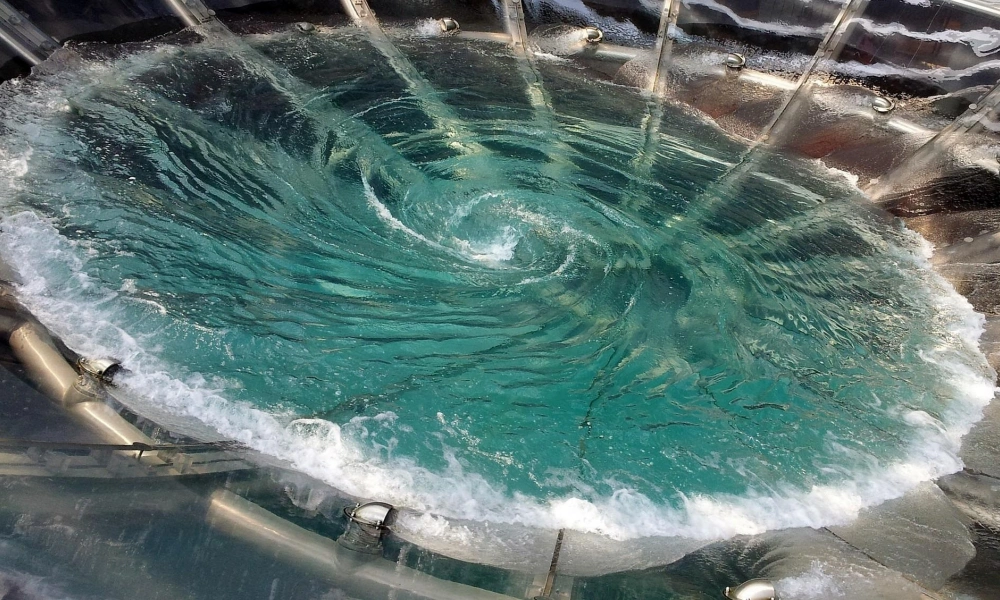
It sucks a large amount of water into the pump body through a water inlet installed at the bottom of the boat. The internal motor drives the impeller to rotate at high speed, compressing the water flow at high pressure, and finally sprays the water flow at an extremely high speed through a narrow nozzle at the tail. According to the principle of conservation of momentum in physics, the powerful thrust generated by this high-speed jet can instantly propel the boat to high speed.
For ordinary players, the most intuitive feeling is “stability” and “speed.” Because the Electric Water Jet produces a concentrated jet stream instead of scattered water splashes, the boat is very stable during linear acceleration, and you can even experience a “push-back feeling” like a sports car.
2. Balancing Efficiency and Safety: A “Protective Umbrella” for Players
In water entertainment scenarios, safety is always the top priority. If you’ve been to crowded beaches or shallow waters, you’ll understand the limitations of traditional propellers. The exposed metal blades are not only like a rotating sharp knife, posing a risk of injury, but also very fragile—once entering shallow waters, rocks, aquatic plants, or floating plastic bags can at best render the propeller useless, and at worst directly damage the motor.

This is the first objective reason for the popularity of Electric Water Jet: it is a “hidden” power source.
The rotating blades of the Electric Water Jet are tightly enclosed in a stainless steel pump body, and the water inlet is equipped with a grille. This means that even if the boat is sailing in shallow waters or there are swimming tourists nearby, there is no need to worry about collisions or entanglement at all. For manufacturers, this design greatly expands the use boundary of the boat—from clear deep lakes to shallow waters overgrown with weeds, the Electric Water Jet can handle it with ease.
3. Control Logic: “Point-and-Shoot” in the Digital Age
Many veteran players are shocked by the “smooth” control feel when they try electric jet boats for the first time.
Traditional electric outboard motor turns require physical movement of the entire motor housing, resulting in heavy force feedback and delay. The steering of an Electric Water Jet is achieved by adjusting the direction of the tail nozzle. With the intervention of the electronic control system, this power response can reach the second level.
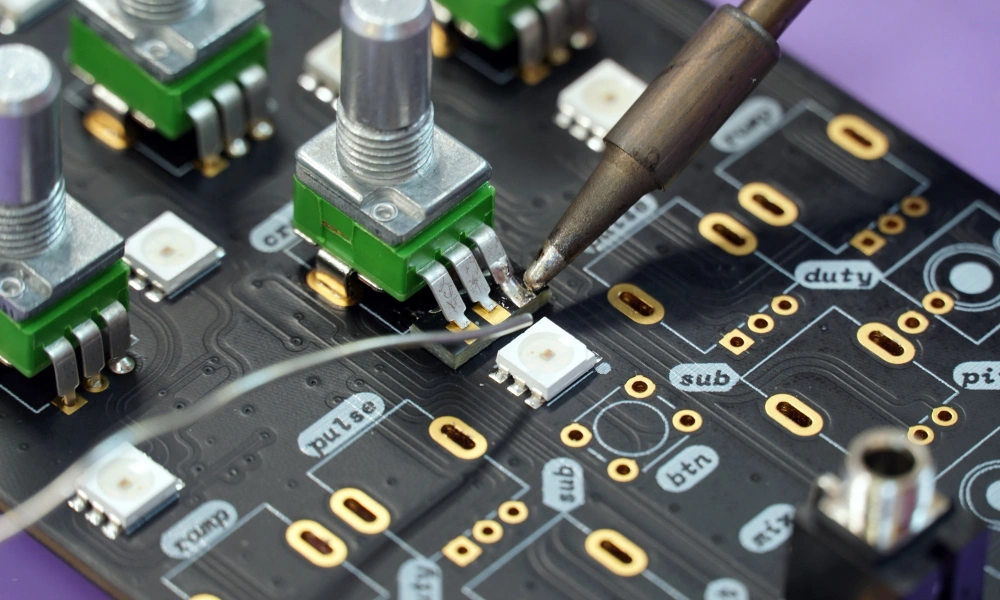
When you step on the accelerator, the current instantly drives the motor to reach peak torque, without the preheating of a fuel engine or the loss of mechanical transmission. For “water go-karts” that pursue a competitive feeling, this sensitivity means you can more accurately cut into every corner and complete various nimble obstacle avoidance actions during high-speed cruising. This leap from “mechanical control” to “digital power” is the core selling point that modern water entertainment equipment attracts young people.
4. Reducing Burdens for Manufacturers
If we switch our perspective to boat manufacturers (OEMs), what they care about is not only whether it’s fun, but also whether it’s easy to build.
In the traditional power installation process, manufacturers need to consider very cumbersome system integration: motor positioning, controller fixing, complex wiring, and the most troublesome thermal management—you need to arrange long cooling water pipes and drill holes in the hull to ensure that the power system does not burn out under high load.
The “integrated” solutions launched by leading domestic enterprises such as Kumpen Power are changing all this.
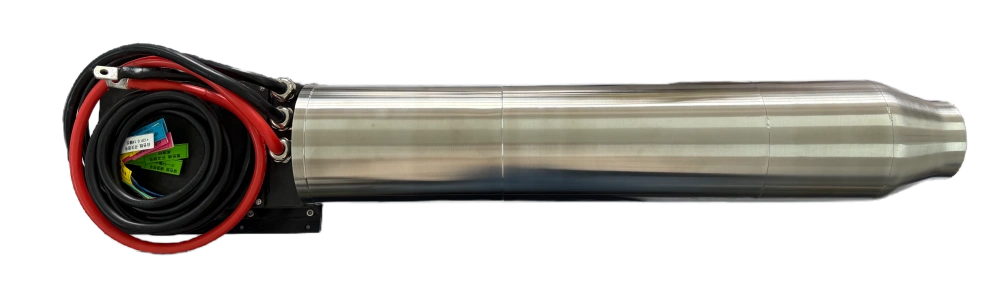
Today’s advanced solutions directly encapsulate the controller and motor together. For manufacturers, this is no longer a “parts package” that needs to be assembled, but a complete “power module.” Because both the controller and the motor are integrated on the pump body of the Electric Water Jet, they can directly complete water circulation cooling by leveraging the natural advantage of the pump body’s contact with the water surface, without the need for any external heat dissipation pipes at all.
The result of this “subtraction” logic is: an ordinary technical worker can complete the installation of a set of power system in only 30 minutes after understanding the basic interfaces. This plug-and-play convenience allows manufacturers to focus more on the design of the hull shape and comfort, greatly shortening the product launch cycle.
5. Kumpen Power: Empowering the New Track of Water Entertainment with Professional Technology
In this water revolution driven by “electricity,” Kumpen Power has grown into a leading enterprise in the field of special propulsion systems for electric surfboards and jet skis in China, relying on profound technical accumulation. We not only pay attention to the size of power, but also focus on whether this “heart” is strong and intelligent enough.

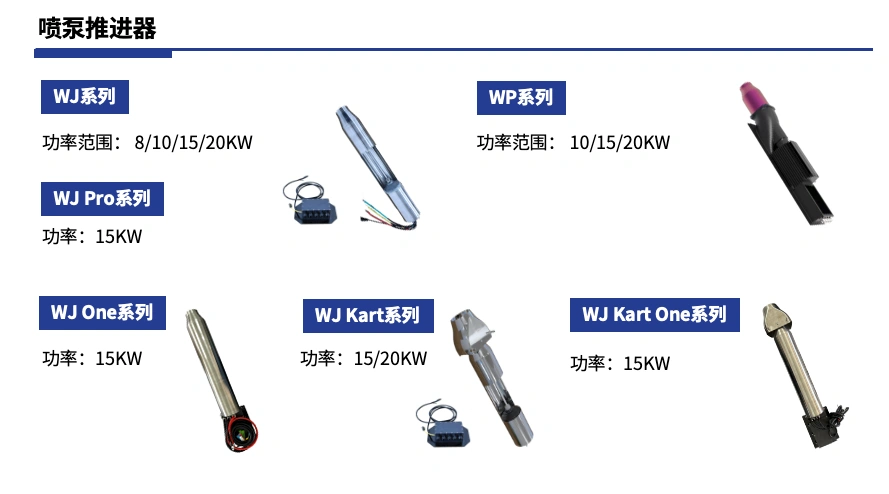
To adapt to different entertainment scenarios, Kumpen Power has developed a variety of product lines for Electric Water Jet. We deeply understand that the use environment of entertainment equipment is often harsher than imagined, so we insist on using all stainless steel materials to build the Electric Water Jet shell and core components, ensuring the product’s excellent performance in resisting sand and gravel impact and seawater corrosion.
Our core advantage lies in the understanding of “integration”:
- High Integration: Our Electric Water Jet products not only integrate the controller with the motor, but also support mainstream industrial communication protocols such as 485/CAN/Bluetooth. This means that manufacturers can easily connect the power system with intelligent instruments and mobile Apps to provide users with digital navigation feedback.
- Industrial-Grade Reliability: By simplifying complex mechanical structures such as gearboxes and adopting a direct-drive logic, the Electric Water Jet not only improves energy conversion efficiency, but also makes the later maintenance cost almost zero.
- Professional-Grade Adaptation: Whether it is a power surfboard pursuing lightweight or a dual-Electric Water Jet jet ski pursuing extreme power, Kumpen Power can provide mature hardware solutions.
6. Conclusion: Leading the New Future of Marine Power
The electrification of marine power is not simply replacing the fuel tank with a battery. It is an all-round evolution of safety, integration efficiency, and control experience. When Electric Water Jet solves the problems of safety and maintenance, and “integrated” design liberates manufacturers’ production lines, the threshold for water entertainment is greatly reduced, and more innovative ways to play can emerge.
As a power base supplier in this field, Kumpen Power always stands at the forefront of technology. We assist every partner in manufacturing more reliable and competitive products. In the future, whether it is in the vast coastal areas or the inland rivers of cities, Kumpen will serve as the most professional technical partner to lead the new era of marine propulsion systems with you.