
1. Breaking the Dilemma: The Green Transformation of Inland Navigation
In the traditional fields of inland navigation and official operations, fuel outboard motors have long been the absolute mainstay. However, with the deepening of global environmental governance, traditional fuel engines are facing an unprecedented structural dilemma: high fuel expenses, frequent mechanical maintenance, and unavoidable emission pollution and vibration noise. Especially in drinking water source protection areas and urban inland waterways, the “exit” of fuel engines has transitioned from an environmental initiative to a rigid policy constraint.

The electrification transformation has become a deterministic trend in the global marine industry. Driven by international emission reduction agreements and domestic “dual carbon” goals, the electrification process of inland ships has accelerated significantly. According to a research report by Cinda Securities, the market size of China’s inland electric ships is expected to exceed 50 billion yuan by 2030. With the popularization of shore power facilities and the progress of battery technology, the economy of electric ships will gradually become prominent, and the market penetration rate of electric outboard motor is experiencing explosive growth.
2. Growing Pains: The Dilemma of Fuel Engines from the Shipowner’s Perspective
As industry practitioners who have long observed marine power systems, we have found that shipowners’ feelings towards fuel engines are becoming increasingly complex. Although fuel engine technology is mature, the “bottomless pit” nature of its maintenance costs is particularly evident in commercial operations.
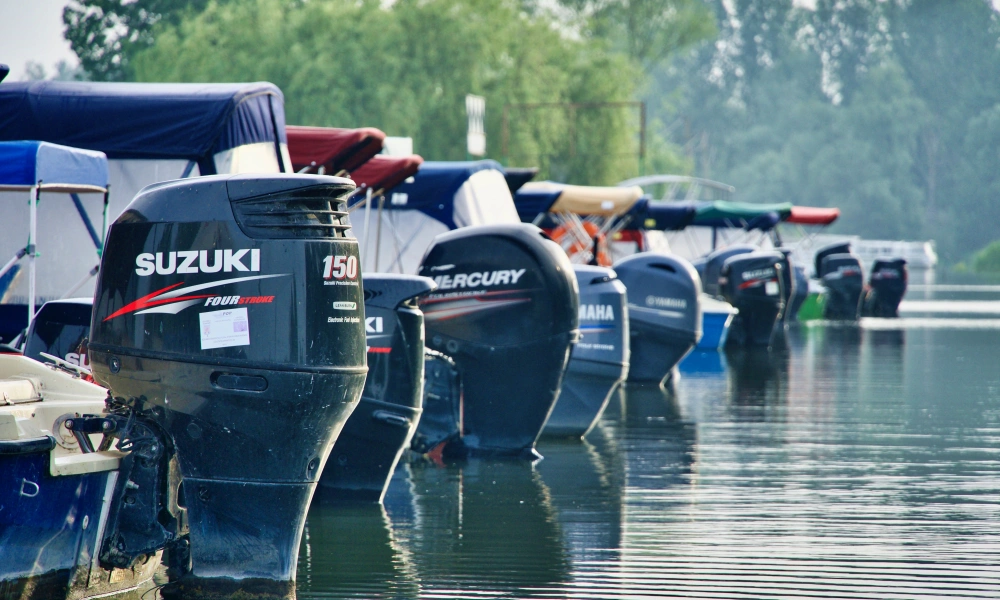
Fuel outboard motors rely on precision gearboxes and drive shafts. Under high-frequency use, gear wear, oil leakage caused by seal failure, and cumbersome routine maintenance not only consume profits, but also increase unplanned downtime. For operating units such as law enforcement ships and transport ships, this structural flaw brings not only economic losses, but also a reduction in mission execution capabilities. In addition, in the face of increasingly stringent emission regulations, shipowners are urgently seeking a power solution that can both meet compliance requirements and substantially reduce costs and increase efficiency.
3. Leapfrogging: The Efficiency Logic of Electric Propulsion Systems
This dilemma has spawned the technological iteration of electric outboard motor. Unlike the complex mechanism of fuel engines, electric propulsion systems (including electric outboard motor) have been attempting a more advanced expression of power since their birth.
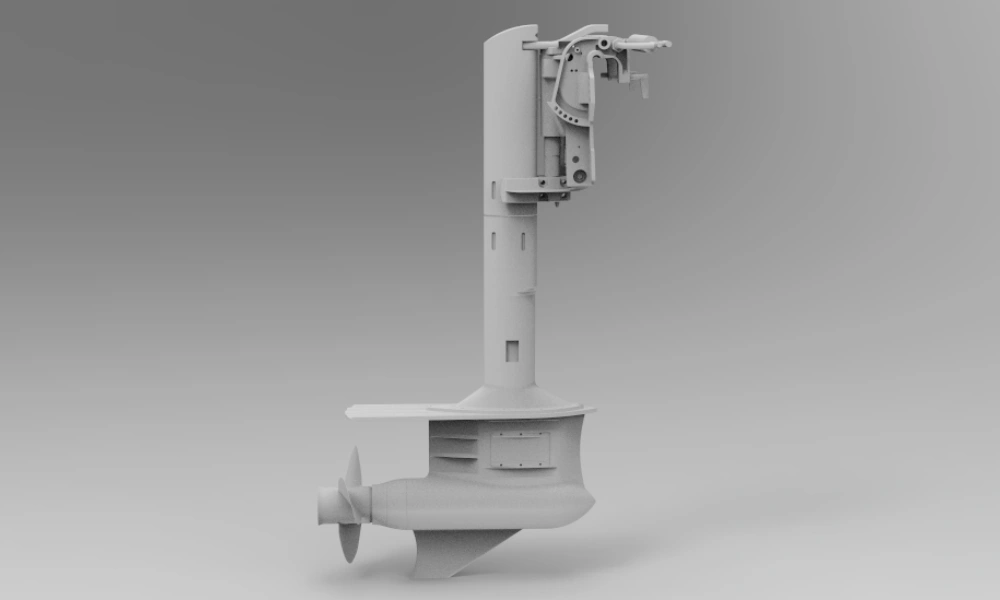
- Direct-Drive Technology: Eliminating Failure Points at the Hardware Level. The current industry trend for electric outboard motor is to adopt a gearless direct-drive design. This design cancels the traditional reduction device, and the motor directly transmits torque to the propeller. By reducing mechanical components, the number of failure points is compressed exponentially, realizing a leap from “scheduled maintenance” to “near-zero maintenance.”
- Reshaping the Economic Balance Sheet. In economic evaluation, data is the most convincing: at a cruising speed of 40 km/h, the operating cost of an electric outboard motor is about 0.42 yuan/km, only 25% of that of a fuel engine. This huge price difference, combined with almost zero maintenance expenses, makes the commercial logic of electrification transformation fully established.
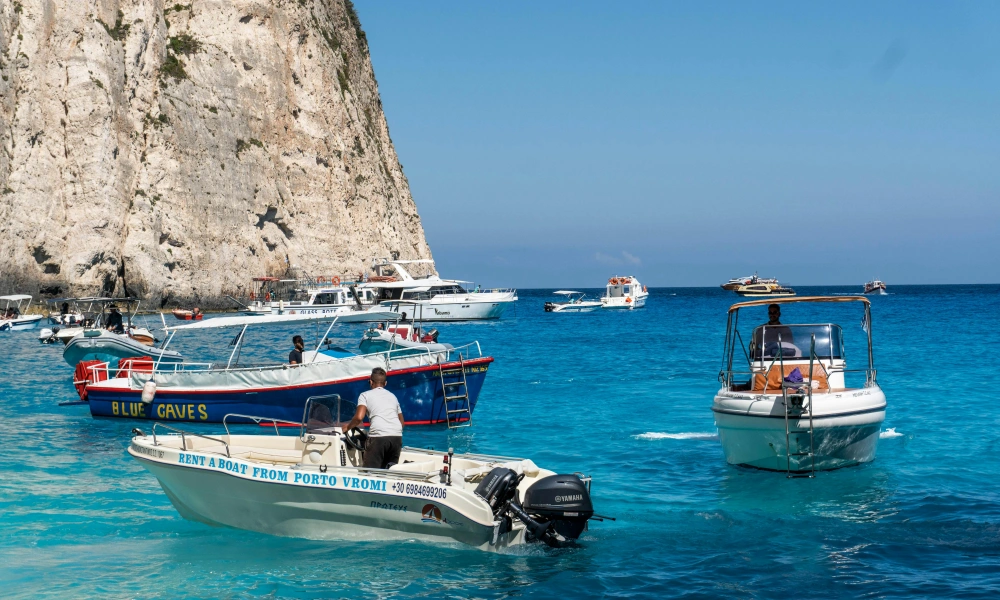
- Liberation of Design Freedom. For small boats under 8 meters, every centimeter of space is crucial. The more compact size of electric outboard motor systems frees up valuable cabin space for ship designers, allowing the originally cramped hull to carry more functional layouts or personnel loads.
4. Insights: How to Address the “Last Mile” of Electrification?
In in-depth exchanges with potential customers, we have observed a commonality: even if they recognize the economic and environmental advantages of electric power, “range anxiety” remains the core barrier to large-scale switching to electric outboard motor. To address this pain point, Kumpen Power has proposed a customized power integration solution. We believe that the future of power systems should not be limited to a single energy source, but should be a flexible integrable ecosystem.
- Certainty of Range Extender Systems: Kumpen Power provides a range extender system (supporting ethanol or diesel) adapted to the EX Series electric outboard motor. When the battery power is insufficient to support the subsequent voyage, the system can seamlessly intervene to supply power, completely making up for the range shortcoming of long-distance navigation.
- Industrial-Grade Lightweight and Weather Resistance: Our EX Series electric outboard motor (8-45kW) has been deeply optimized for professional operating environments. The overall weight is about 30% lighter than traditional gasoline outboard motors. By eliminating the complex gearbox, the overall reliability of the electric outboard motor is greatly improved. The shell is made of marine-grade aluminum alloy, which has excellent impact resistance and corrosion resistance, and can easily cope with harsh seawater environments.
- Extreme Quiet Experience: Environmental friendliness is one of the core advantages of the EX Series electric outboard motor. The operating noise is controlled at around 70dB, much lower than the average 110dB of fuel outboard motors. This generational difference in noise control is not only more friendly to underwater organisms, but also significantly improves the navigation comfort of drivers and passengers.
- Intelligent Control and Response: The electric outboard motor system supports CAN/485 protocols for intelligent linkage. Thanks to the characteristics of the motor, the EX Series electric outboard motor can complete the rapid switching between forward and reverse in 1 second, providing millisecond-level control response in narrow waters or high-frequency berthing operations.
5. Conclusion
The wave of electrification in inland ships has arrived. As a participant in this transformation, Kumpen Power is unifying environmental compliance and commercial returns in every set of propulsion solutions (including electric outboard motor, Electric Water Jet, pod drive) through continuous technological innovation. Whether in the quiet nature reserves or the busy inland waterways, we are committed to providing a more reliable and intelligent power heart.